

My Sperm as Big Business
 Until a few weeks ago, I was an innocent virgin as far as the brave new world of fertility clinics was concerned. Now I am thinking about quitting my day job and becoming a professional sperm donor. Granted, I don’t have the brains of Albert Einstein or the athleticism of Roger Federer. But the first is dead and the second is presently too busy playing tennis to spend his days filling test tubes with genetic material. That leaves me to fulfill the wishes of infertile couples all over the world. In former times only sultans could father 170 children; now anyone who is deemed a genetically superior human being by a fertility clinic can become the biological father of hundreds of children. But after reading the facinating story about fertility clinics in a recent issue of the NY Times (see below), I am a bit worried about 200 children knocking one day on my door, asking me to babysit my uncountable number of grandchildren
Is Christianity Compatible with Republican Values?
I always found it curious that fundamental Christians preferred in large numbers Republicans over Democrats. After all, the core values of the democratic party seem to be much more in tune with Christianity. At least one evangelic pastor woke up recently and remembered that Christians are supposed to support peace and not war. Read this interesting Op-ed piece in the NY Times of January 20, 2006.
Continue ReadingIn her Shoes
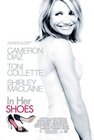 Two sisters, Maggie (Cameron Diaz) and Rose (Toni Collette), could not be more different. Maggie gets any man she wants but is not able to hold a steady job and support herself financially. Rose has no success with men and is climbing up the corporate ladder in a high prestige law firm. When Rose finally manages to get a man to spend a night with her, her state of romantic bliss comes quickly to an end. Having been kicked out her father’s house, Maggie is staying at Rose’s apartment while trying to find a job. When Rose boyfriend rings the doorbell one afternoon, Maggie jumps into bed with him only to be caught in flagrant by her sister. Rose is so hurt that she kicks Maggie out and the sisters lose all contact and go their own novel ways. But despite all their differences, the two ladies are bound together deeply by their experience of having lost their mentally ill mother at a very young age. The film traces the psychological difficulty of being cut off from someone who is tightly connected to one’s identity. The movie is watchable on an airplane (I saw it on my recent trip to Los Angeles) but is not particularly profound. There are a few good jokes, primarily delivered by Jewish ladies in a Florida retirement community.
Nina Simon’s “Mississippi Goddam”
 Nina Simone has been one of my favored jazz singers for a long time. I counted myself until January 16th as a connoisseur of her entire work. But on Martin Luther King day I heard her civil rights song Mississippi Goddam on the radio that showed me that having all her „Best of CDs“ is no guarantee that one gets to know the best songs of an artist. The live recording of Mississippi Goddam strikes me as one of the best political songs ever.
Everyone can be a Novelist
 At least Chris Bay thinks so in his new handbook, No Plot? No Problem!: A Low-Stress High Velocity Guide to Writing a Novel in 30 Days. Bay tells us in the opening pages of his treatise that he once believed that you needed several things to start writing a novel in descending order of importance: lots of coffee, plot, character, and setting. But Bay now thinks this is all wrong. All you really need is one thing: a good deadline. Because many people are bad keeping deadlines without external help, Chris has even organized an annual event, the National Novel Writing Month. Last year 60,000 aspiring novelist participated. Some of the novels produced in this speedy fashion were already published by reputable houses. The novel writing month is scheduled again for this November. What are you waiting for?
Continue Reading
The Terminator of Speech
 “The doctor then told me that I should not do any events for three days and also said to me I should not speak for three days. My wife said, ‘Make it seven.’” Arnold Schwarzenegger, California Governor, after cutting his lip in a motorcycle crash in Los Angeles.
Syriana
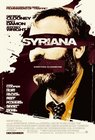 It is customary at many opera productions to hand out notes to the audience about what is happening in the different acts of the musical work, often because the opera is sung in a foreign language. Most critics and moviegoers have remarked the plot of Syriana is jumping to so many places and to so many individuals that one needs the equivalent of opera notes to stay abreast of what is happening. Alas, if this were the only problem of the film, my weekly evening at the movies would have been splendid. When I form a judgment about a film I asked myself. Given the subject matter, how well was the film been designed and executed. In the case of Syrania, the answer is: poorly. The voracious increase in demand for oil from rapidly growing China and India and the dwindling reserves around the world is posing an enormous economics and political challenge during the next couple of decades.
Happiness Through the Ages
 What makes it so difficult to interpret how people in former times have thought about the human condition is that words change their meanings over time, sometimes morphing into the exact opposite of what they originally meant. As I just learned by reading in ‘The Economist’ a review of “Happiness: A History, ” the word “happiness” has changed its meaning considerably. I didn’t quite realize until today that if God wants speaks directly to people or at least their prophets, he or she has to master the idiom of a given age. To come across as really cool, God could walk up to a woman today and say, “Hey man, what’s up.” If God had done this two thousand years ago, a woman would likely have replied: “Almighty, I am sorry, but you are mistaken. I am a woman and not a man!”
Match Point
 I buried Woody Allen tonight. The first 90 minutes of Match Point were entirely repetitive of his previous films, with the exception the location: the film takes place in London and not Manhattan. I wished I had stayed home and not wasted time on such a trivial movie. Allen’s final mission in life seems to be to prove right Freud’s theory that human beings are entirely controlled by their desires for sex. Allen has devolved into a puppeteer, incapable of creating human characters. But as an artist he has become sterile. His creative impotence is painful to watch. The last thirty minutes of the film relieve the pain only because Allen let’s a murder take place and you want to know whether the murderer gets away with the crime. If a young film student had made this movie, the critics would have buried the person’s career before it ever started. It obviously pays to have a large loyal audience, but I am no longer part of it.
Continue Reading
Brokeback Mountain
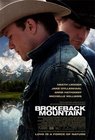 Just as in The Sound of Music the most impressive character in the Ang Lee’s cowboy movie are beautiful mountains. Whenever the camera shows pictures of the arresting Wyoming landscape, one’s soul takes in a deep breath. As a piece of drama the film falls flat: forty years ago a story of two cowboys in love would have been a shocker to everyone. Elton John got married two weeks ago to his boyfriend and this was news only because Elton John is a celebrity. As a piece of politics and a moral statement, the movie works very well. Whereas European countries one after another are allowing gay people to form mariage-like unions, several American states now are putting laws on the books to outlaw legal unions between people of the same sex. Since the identity of most American is tied up with the idea of macho cowboy, it is a brilliant symbolic move to show cowboys deeply in love with each other.

© 2026 Peter Murmann. Powered by ExpressionEngine.


